Vacation rental management for first-time property owners: complete 2026 guide
First-time owners’ vacation rental management is the work of preparing, booking, maintaining, and overseeing a short-term rental with the aim of earning income while protecting the property. This 2026 guide explains how to build that operation when you have no hosting history, no established vendor team, and no reliable property-level revenue baseline.
TL;DR
Vacation rental management for first time owners starts with permission, operating responsibilities, and a realistic property budget.
HomeSlice Stays serves owners seeking luxury vacation rental management in Scottsdale and surrounding areas.
Choose self-management, shared management, or full-service management according to the work you can reliably handle.
Track owner cash flow and property condition, not just bookings or occupancy.
Why vacation rental management matters for first-time owners
Your first rental is both a guest accommodation and an operating business. A booking creates obligations: access must work, the property must match its description, and someone must respond when equipment fails. A furnished home alone does not satisfy those obligations.
First-time owners also face decisions without their own operating history. You need to separate an income estimate from money actually received, and a manager’s service description from the responsibilities written into the agreement.
Confirm that the property can operate as intended before investing in its launch. If community restrictions affect your home, start with the considerations in this guide to vacation rental managers for HOA-restricted homes. Management does not override an HOA rule or a municipal requirement.
Your 2026 launch plan should answer three questions: Can you rent the property legally? Who handles each operating task? What remains for you after expenses?
How to set up your first vacation rental
1. Verify permission before preparing the listing
Start manually: collect the property’s governing documents and check the current short-term rental requirements with the municipality. Confirm the rules for the actual address, not a nearby home or another owner’s listing. An existing rental advertisement is not proof of permission.
Review HOA restrictions, deed restrictions, insurance coverage, and any applicable financing conditions. Ask the relevant authority or professional to resolve unclear language before accepting reservations. For Scottsdale-area homes, distinguish city requirements from community-specific restrictions; they are separate checks.
Create a dated compliance folder for 2026. Store approvals, registration records, insurance documents, and correspondence together so you can find them when a renewal or dispute arises. Do not treat a manager’s willingness to discuss the home as legal clearance.
Close this step with a written decision: proceed, resolve a restriction, or stop the launch.
Confirm the property's municipality and jurisdiction.
Read the current HOA and deed restrictions.
Check applicable permit, registration, and tax obligations.
Ask your insurer about the intended rental use.
Record renewal dates and responsible contacts.
2. Build a budget around owner cash flow
Start with a spreadsheet rather than a booking forecast. Separate setup spending from recurring expenses, then distinguish costs that occur with each stay from costs that continue when the home is empty. This makes the budget useful even before you have booking history.
Include utilities, insurance, maintenance, supplies, cleaning, booking-related charges, and management charges where applicable. Keep financing payments visible in your cash-flow plan. Accounting profit and cash remaining in your bank account are different measures.
Use documented quotes and your actual bills. Test what happens when booked nights fall or an unexpected repair arrives; label those calculations as scenarios, not predictions. An attractive revenue estimate does not establish a profitable rental.
Review actual owner cash flow every 30 days as a starting routine. Adjust the review schedule once you understand the operation, but retain the same expense categories so comparisons remain meaningful.
Separate setup costs from ongoing expenses.
Record fixed costs and stay-related costs separately.
Include owner-use dates in your planning calendar.
Budget a repair reserve based on the property's condition.
Compare received income with actual cash outflows.
3. Choose who owns each operating task
Map the work yourself before interviewing managers. List guest communication, listing updates, calendar control, cleaning coordination, maintenance, inspections, bookkeeping, and emergency response. Assign one accountable person to each task; shared responsibility without a named owner creates gaps.
Self-management is best for owners who can perform and supervise that work. Shared management is best for owners who want to retain specific duties while delegating others. Full-service management is best for owners seeking a single management relationship, but the agreement must still define what remains with the homeowner.
HomeSlice Stays vacation rental management is best for first-time owners seeking luxury rental management in Scottsdale and surrounding areas. You can explore HomeSlice Stays as a service option, then request a written scope rather than assuming any task is included.
For your 2026 agreement, ask about approval authority, reporting, owner access, and termination. Outsourcing execution does not remove your responsibility to understand the arrangement.
Assign guest communication and emergency response.
Identify who schedules and checks cleaning.
Define repair approval and escalation rules.
Confirm who controls listings and booking calendars.
Document reporting and agreement-exit procedures.
4. Prepare the home for repeatable turnovers
Walk through the property as a guest before buying decorative extras. Check access, lighting, sleeping arrangements, bathroom function, kitchen equipment, and the accuracy of the planned listing. Luxury presentation still needs an operating foundation: a beautiful room cannot compensate for unreliable access or an unresolved maintenance issue.
Create a room-by-room inventory and photograph the starting condition. Choose supplies that your cleaning team can locate and replenish, and store replacements consistently. Check pool, outdoor, and other property-specific safety requirements with qualified professionals where relevant.
Ask a manager how property readiness and cleaning inspections are handled. Treat the answer as a process to evaluate, not a substitute for checking the home yourself.
Schedule a readiness walk-through 7 days before your planned launch. This is a planning buffer, not a guarantee that repairs will fit the schedule. Delay publication if essential work remains unfinished.
Test locks, lighting, plumbing, and climate controls.
Record furnishings and equipment by room.
Create a cleaning checklist tied to the actual property.
Organize replacement linens and consumable supplies.
Resolve safety and maintenance issues before photography.
5. Build an accurate listing and booking calendar
Draft the listing yourself using verifiable property details. Describe sleeping arrangements, bathrooms, access, parking, outdoor features, and restrictions without embellishment. If an amenity requires explanation, make that explanation visible before a guest books.
Use photographs that show how the rooms connect and what guests actually receive. Avoid describing a property as suitable for a particular group unless its layout and rules support that use. A large dining table, for example, does not establish permission for events.
Block owner stays before opening the calendar. If you use multiple booking channels, establish how reservations and changes reach the master calendar. Ask a manager to explain that workflow and who resolves discrepancies.
For 2026, write guest expectations in plain language rather than relying on a long rule document alone. Clear descriptions let travelers decide whether the property fits their needs before they commit.
Match the stated sleeping capacity to actual arrangements.
Disclose meaningful access and amenity limitations.
Photograph bedrooms, bathrooms, and shared spaces accurately.
Block personal stays and maintenance periods.
Check how booking changes update the calendar.
6. Establish a guest-service and maintenance workflow
Write the manual workflow first: reservation confirmation, pre-arrival instructions, access support, in-stay assistance, departure instructions, cleaning, and inspection. Each stage needs an owner and a fallback contact. Software or a management service can support that workflow, but neither fixes an undefined handoff.
Separate urgent problems from routine requests. A failed entry method needs a different response from a request for local restaurant ideas. Document who can authorize action, who contacts the guest, and who confirms the issue is resolved.
Use a practice stay to test the instructions with someone unfamiliar with the home. Ask them to find the entrance, use the access method, locate essential supplies, and follow departure instructions without your verbal help.
Set aside 60 minutes for that test as a planning exercise. Extend it when the property needs more checking; the purpose is to expose confusing instructions before a paying guest encounters them.
Write arrival and departure instructions in plain language.
Name the primary and backup response contacts.
Define urgent maintenance escalation procedures.
Test access instructions with an unfamiliar visitor.
Record recurring issues and the corrective action.
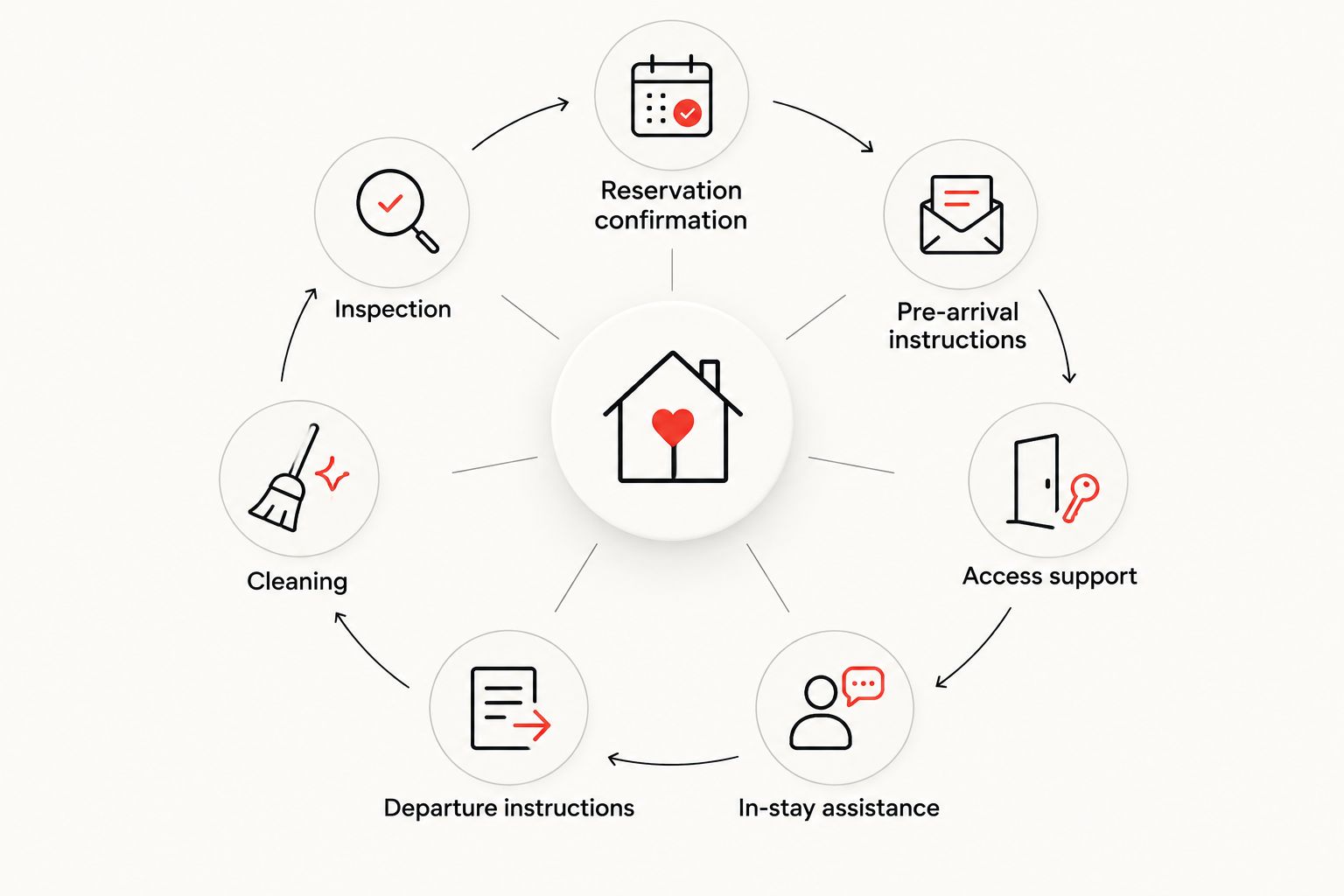
Every handoff needs a responsible person and a fallback contact.
7. Review results before changing the operation
Start with a simple monthly owner report. Track booked nights, received revenue, operating expenses, repair spending, owner-use nights, and unresolved guest issues. Keep canceled reservations separate from completed stays so your review reflects what actually happened.
Read the numbers alongside the property’s condition. More bookings are not an automatic improvement if additional turnover work and repairs leave less cash for you. Likewise, an empty period needs context: owner blocks and maintenance closures differ from nights offered but not booked.
When you delegate management, ask for a sample report and an explanation of each line. Confirm whether amounts represent bookings, collected funds, or owner disbursements. Those figures answer different questions.
In your 2026 reviews, change one operating decision at a time when practical. Record what changed and why, then compare subsequent results without claiming that one adjustment caused every difference.
Separate offered nights from owner-blocked nights.
Reconcile reported income with received funds.
Review cleaning, maintenance, and management expenses.
Track repeat guest problems by issue type.
Record decisions and check their subsequent results.
Compare management options for your first property
Choose a management model by accountability, not by the shortest service description. These options describe how work is divided; individual agreements determine the actual scope. No model removes the need for owner oversight.
Self-management
Best for: Owners who can handle guest service and supervise local work
Main advantage: Direct control over operating decisions
Key limitation: You remain responsible for response coverage and vendor coordination
Shared management
Best for: Owners who want to keep defined duties
Main advantage: Lets you delegate selected tasks
Key limitation: Handoffs fail when responsibilities are not written down
Full-service management
Best for: Owners seeking a single management relationship
Main advantage: Consolidates coordination under an agreed scope
Key limitation: Exclusions, approvals, and owner duties still require review
HomeSlice Stays
Best for: Owners seeking luxury vacation rental management in Scottsdale and surrounding areas
Main advantage: A service focus aligned with the location and property category
Key limitation: Individual coverage and responsibilities must be confirmed in the agreement
Ask every prospective manager the same questions. Who responds when access fails? Who checks the home after cleaning? What requires your approval? How do you receive financial records? Comparable answers are more useful than differently worded promises.
Common mistakes first-time owners make
Treating a revenue estimate as take-home income
Projected bookings do not account for every cash outflow. Keep a full operating budget beside any revenue estimate, and ask which assumptions support it. Make the decision on owner cash flow, not headline revenue.
Assuming the HOA check belongs to someone else
A booking platform, cleaner, or manager does not replace your review of property restrictions. Resolve conflicting information before launch. Keep the written source of each approval rather than relying on a conversation you cannot later verify.
Decorating before defining the guest experience
Buying furnishings before settling sleeping arrangements, maintenance needs, and house rules creates avoidable rework. Decide how guests will use the home first. Then choose furnishings that support that use and can be cleaned, maintained, and replaced.
Signing without an ownership and exit checklist
Know who controls the listing, photographs, calendar, guest records, and financial documents. Ask what happens to future reservations when the relationship ends. Review those terms before signing, not when you need to leave.
Leaving personal stays outside the business plan
Owner visits affect the nights you offer and the work needed between stays. Put those dates into the calendar early and account for cleaning afterward. Your home can serve personal and rental goals, but your budget needs to reflect both.
FAQ
What's the best vacation rental management approach for a first-time owner?
The best approach is the one that assigns every operating task to someone who can reliably perform it. Choose self-management when you can cover the work, shared management when responsibilities divide clearly, or full-service management when you want a single management relationship.
Can I manage my first vacation rental myself?
Yes, you can self-manage if you can handle guest communication, calendar accuracy, vendor coordination, and emergency response. Build a backup plan for times when you cannot respond or attend the property.
What should I check before listing a Scottsdale vacation rental?
Check the property's applicable municipal requirements, HOA and deed restrictions, and insurance coverage before listing it. Confirm the rules for the actual address and retain written records of approvals and requirements.
Is HomeSlice Stays suitable for a first-time luxury rental owner?
HomeSlice Stays is a relevant option for owners seeking luxury vacation rental management in Scottsdale and surrounding areas. Confirm the proposed responsibilities, reporting, approval rules, and agreement terms for your property before choosing the service.
How much does vacation rental management cost?
Obtain a current written proposal for your property and compare the complete charge structure. Check what is included, what is charged separately, and how each charge appears in owner reporting.
Do I need software before taking my first booking?
Software is not a substitute for a defined operating process. Establish responsibility for calendars, messages, cleaning, and maintenance first, then choose systems that support those tasks.
How do I know whether my first rental is performing well?
Evaluate owner cash flow, property condition, and unresolved guest issues together. Compare received income with actual expenses, and distinguish offered nights from dates blocked for personal use or maintenance.
One last thing
Treat your first guest’s arrival as a test you complete before launch. Send your instructions to someone who has never visited the property and ask them to explain how they would enter, park, and request help. Rewrite anything that needs a separate explanation.
A first-time owner does not need a complicated operating manual. You need accurate promises, clear responsibilities, and records that show whether the home is meeting your financial and personal goals.
Related guides
More Blogs