Vacation rental management for real estate investment groups: complete 2026 guide
Investment group vacation rental management is the coordination of guest operations, property upkeep, and owner reporting to protect rental income across jointly owned homes. This 2026 guide explains how to divide authority, evaluate management options, and judge performance without confusing booking revenue with investor returns.
TL;DR
Vacation rental management for investment groups needs clear spending authority, property-level accounting, and consistent investor reporting.
HomeSlice Stays is best for Scottsdale-area luxury rental owners seeking property management and booking services.
Choose a management model by operational responsibility and reporting requirements, not booking revenue alone.
Approve operating reserves before distributions, and verify rental restrictions before committing acquisition funds.
Why vacation rental management matters for investment groups
A jointly owned vacation rental has two operating audiences: guests who need a reliable stay and investors who need accountable decisions. Your management structure must serve both without turning every repair, refund, or calendar change into a partner vote.
Luxury properties add physical assets to supervise: furnishings, outdoor spaces, and any amenities included in the listing. Each promise to a guest creates an operating responsibility. Assign that responsibility before you approve the listing.
HomeSlice Stays provides luxury vacation rental property management and booking services in Scottsdale, Arizona, and surrounding areas. HomeSlice Stays is best for Scottsdale-area luxury rental owners seeking property management and booking services. Investment groups should separately confirm whether a proposed agreement meets their entity-level reporting and approval requirements.
For your 2026 operating plan, separate three questions: Is the property permitted to operate as intended? Can the team deliver the advertised experience? Does the resulting cash flow support the ownership plan? A strong answer to one does not answer the others.
Build an operating structure investors can supervise
1. Define authority before assigning daily operations
Start with a shared document that names the ownership representative and records who can approve operating decisions. A spreadsheet and a written approval policy are enough to establish the structure before you evaluate management services.
Distinguish routine authority from exceptional decisions. A guest-facing team needs a clear response path for urgent maintenance; investors need control over capital projects, borrowing, and changes to the investment strategy. Do not route every issue through the full ownership group.
Your operating agreement and management agreement should work together. Ask legal counsel to resolve conflicting approval rights rather than expecting an operations team to interpret them during a guest incident.
Name one authorized owner representative and a backup.
Separate routine repairs from capital improvements.
Define an emergency approval and notification process.
Record who approves refunds and owner-use dates.
Document how unresolved partner decisions get escalated.
2. Verify each property's operating permissions
Build an address-specific requirements register before you publish a listing or finalize an acquisition assumption. Start manually: collect governing documents, identify the relevant jurisdiction, and request written clarification where the intended use is unclear.
Do not treat a neighboring property's listing as proof that your property can operate the same way. Municipal requirements, recorded restrictions, insurance conditions, and association rules require separate review. A management proposal does not replace that work.
Assign someone to maintain the register after launch. Permission checks belong in your ongoing operating controls, not just the acquisition file. Your guide to vacation rental managers for HOA-restricted homes addresses another management-selection question worth resolving before you commit.
Confirm the jurisdiction governing the property address.
Review association documents and recorded restrictions.
Verify applicable permits, registrations, and tax obligations.
Confirm insurance coverage for the intended rental activity.
Record renewal dates and the person responsible for each.
3. Turn the service proposal into an accountability map
List every recurring task and assign an accountable party before comparing proposals. You can create this map in a shared document; the purpose is to expose gaps, not purchase another system.
For HomeSlice Stays vacation rental management, evaluate the proposed agreement against the same task list you use for any alternative. The company's stated services cover luxury vacation rental management and booking, but your contract must establish the specific responsibilities your group requires.
A full-service arrangement reduces your group's direct involvement only to the extent that the agreement assigns those duties. Its limitation is dependence on an outside team's execution and reporting. Keep investor governance with ownership, even when you delegate property operations.
Assign responsibility for guest messages and check-in support.
Identify who schedules cleaning and verifies completion.
Define maintenance coordination and escalation duties.
Establish who maintains listing accuracy and calendar rules.
Specify reporting deliverables, access rights, and exclusions.
4. Build a property-level budget before setting distributions
Create a 12-month operating budget for each home, then combine the results at portfolio level. Begin with a spreadsheet that separates rental receipts, operating expenses, debt service, capital spending, and owner distributions.
Your 2026 budget should show timing as well as totals. A property can collect revenue in one period while paying for repairs, insurance, or replacements in another. Distributions should follow a reserve policy rather than a strong booking month.
Define each reporting measure before comparing homes. For example, record whether cleaning receipts and related expenses appear separately, and distinguish operating cash flow from cash remaining after debt service. Consistent definitions make differences between properties easier to investigate.
Build separate operating budgets for each property.
Record debt service outside day-to-day operating expenses.
Track capital purchases separately from routine maintenance.
Approve a reserve policy before authorizing distributions.
Reconcile management statements with bank activity.
5. Specify the guest experience your budget must support
Walk through the property and compare every listing promise with the actual guest experience. A manual room-by-room checklist is a practical starting point. Photograph existing condition for internal records and assign responsibility for correcting discrepancies.
For a luxury rental, attractive photography does not settle operational questions. If your listing includes a pool, workspace, or outdoor dining area, establish who checks it, what counts as ready, and how exceptions are handled. Describe only features the property actually provides.
Standardize the inspection process across homes without forcing every home into an identical guest profile. A family stay and a corporate retreat require different property-fit decisions; neither should depend on an unsupported promise in the listing.
Match listing descriptions to verified property features.
Record cleaning and inspection acceptance criteria.
Check access instructions before each arrival.
Identify repair issues that require blocking reservations.
Assign ownership of guest complaints and follow-up.
6. Compare performance using consistent definitions
Start with a monthly property scorecard rather than a portfolio revenue total. A spreadsheet works if someone owns the reconciliation and every property uses the same definitions.
Review occupancy alongside average daily rate, rental revenue, operating expenses, and cash flow. Define available nights explicitly: owner stays, maintenance closures, and other blocks change what the denominator means. Do not let a calendar decision masquerade as a demand improvement.
For 2026 reporting, compare budget with actual results and explain material differences in plain language. Ask whether a variance came from booking activity, calendar restrictions, operating expenses, or capital work. Each cause points to a different decision.
Separate paid guest nights from owner-use nights.
Document how available nights are calculated.
Compare actual operating expenses with the approved budget.
Track unresolved maintenance and guest-service issues.
Record corrective actions, owners, and review dates.
7. Set reserves and handover rules before expanding
Review the full ownership burden before adding another property. Begin with invoices, insurance documents, maintenance records, and your existing reserve policy. Expansion should not depend on treating replacement spending as someone else's future problem.
The distinction between acquisition spending and recurring ownership obligations also appears in villa operating costs: purchase decisions need an operating budget behind them. Keep the markets separate, though; a Dubai villa budget is not evidence of Scottsdale expenses or rental performance.
Map the exit process with the same care as onboarding. Establish who controls listing content, booking records, access credentials, vendor information, and future guest communications. Confirm transfer rights and obligations in writing rather than assuming every account can move between managers.
Use a proposed 30-day handover checklist as an internal planning exercise, then adjust it to the signed agreement and existing reservations. This is a planning window, not a promised transition period.
Review reserves before approving another acquisition.
Identify assets approaching repair or replacement decisions.
Record account ownership and authorized access.
Assign responsibility for reservations during a transition.
Document final reconciliation and unresolved claims.
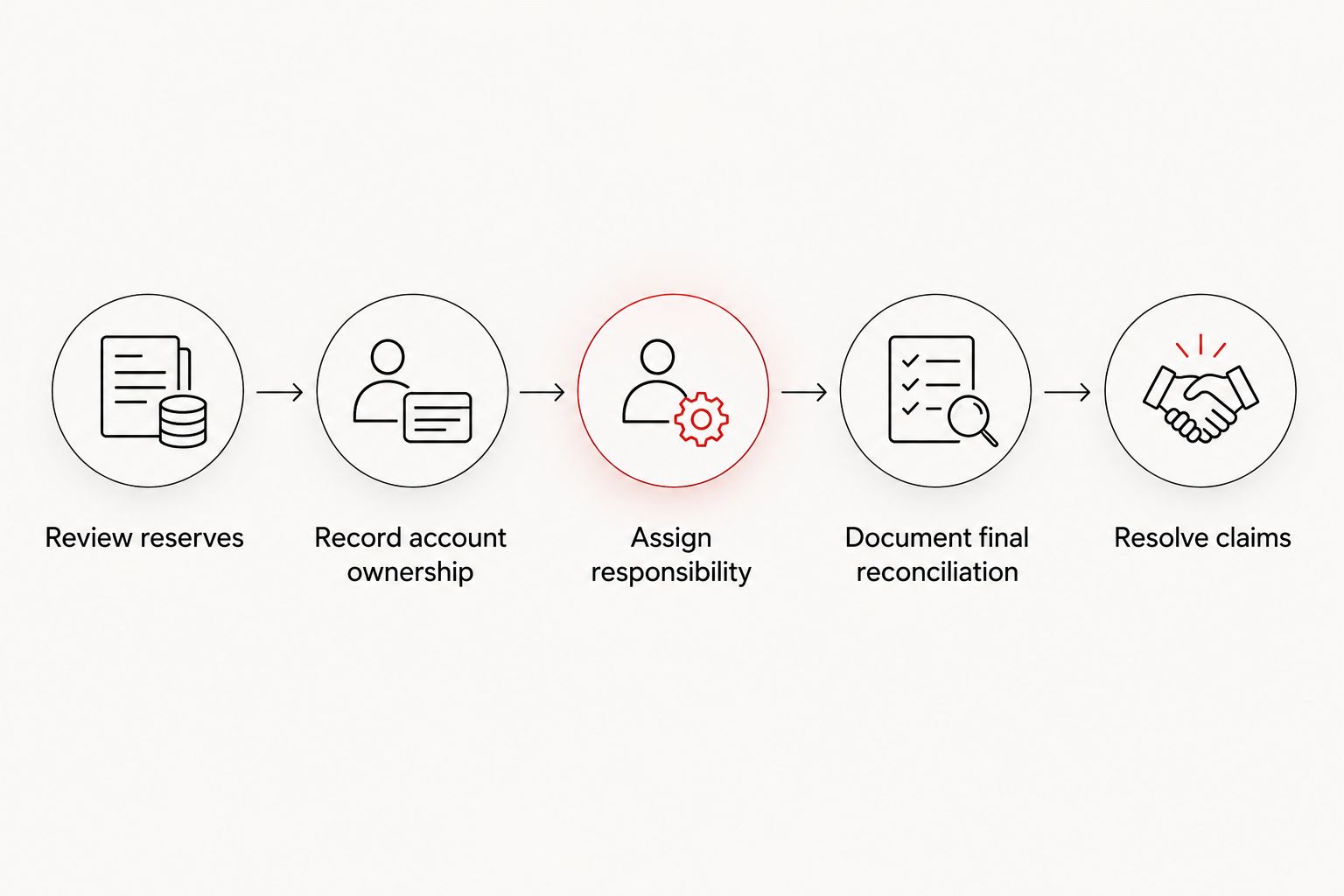
Define transition responsibilities before changing managers or expanding the portfolio.
Compare management options for your investment group
Choose a management model by the work your ownership group can reliably perform. The relevant comparison is not simply internal versus external management; it is who carries daily responsibility, how you verify execution, and what remains with the investors.
The options below describe operating structures, not promised outcomes. A written scope and sample reporting package are more useful for your decision than a broad service label.
Investor-led self-management
Best for: Groups with an accountable operating partner
Main advantage: Direct control over decisions and guest operations
Key limitation: Investors retain staffing, coordination, and service responsibilities
Hybrid management
Best for: Groups retaining selected tasks internally
Main advantage: Separates outsourced work from investor-controlled functions
Key limitation: Handoffs need explicit ownership to prevent gaps
Full-service local management
Best for: Groups seeking to delegate daily property operations
Main advantage: Places agreed operating duties with an outside team
Key limitation: Contract scope and reporting determine actual oversight
HomeSlice Stays vacation rental management
Best for: Scottsdale-area luxury rental owners seeking management and booking services
Main advantage: Matches the stated property category and local service area
Key limitation: Investment-group accounting, approval workflows, and deliverables require confirmation
Choose full-service management when your group wants to delegate daily operations; choose self-management only when a named partner accepts that workload. Hybrid management fits a deliberate division of responsibilities, not an unfinished operating plan.
Before you sign a 2026 agreement, request a walkthrough using your own reporting and approval requirements. Ask the prospective manager to explain what happens when a guest issue, an owner instruction, and a maintenance decision conflict. Evaluate the process, not a hypothetical revenue promise.
Common mistakes investment groups make
Treating booking revenue as distributable cash
Rental receipts do not establish what investors can withdraw. Reconcile operating obligations, debt service, approved capital spending, and reserves before discussing distributions. Keep the distribution decision separate from the performance presentation.
Giving every partner direct access to operations
Multiple investors issuing instructions creates competing priorities for the operating team. Route decisions through the authorized representative while giving other partners the reporting access their ownership arrangements require. Information access and operating authority are different rights.
Applying one property's assumptions to every acquisition
A second home brings its own restrictions, condition, amenities, and operating requirements. Rebuild the property-level budget and requirements register rather than copying the first property's forecast. Portfolio consistency should come from common controls, not identical assumptions.
Comparing management proposals without matching scope
Two proposals can use the same service label while assigning different responsibilities to ownership. Compare exclusions, approval requirements, reporting definitions, and transition obligations side by side. A shorter proposal is not necessarily a simpler operating arrangement.
Allowing owner stays without a written policy
Partner use affects the calendar, cleaning responsibilities, and how you interpret performance. Record approval rules and expense allocation before partners reserve dates. Keep owner-use nights visible so investors do not mistake unavailable inventory for weak guest demand.
FAQ
What's the best vacation rental management model for an investment group?
The best model matches the daily work your group wants to retain with the authority it is prepared to delegate. Self-management requires an accountable operating partner; full-service management requires a clear contract and reporting process.
Is full-service management better than managing rentals ourselves?
Full-service management is better when your group wants to delegate daily property operations. Self-management preserves direct control but leaves investors responsible for guest service, vendor coordination, and operating follow-through.
Can HomeSlice Stays manage luxury vacation rentals near Scottsdale?
HomeSlice Stays provides luxury vacation rental property management and booking services in Scottsdale, Arizona, and surrounding areas. Investment groups should confirm property fit, reporting deliverables, and approval responsibilities in the proposed agreement.
What should investors review in a monthly rental report?
Investors should review property-level revenue, operating expenses, cash flow, calendar use, and unresolved operational issues. Define each measure consistently and reconcile reported activity with supporting records.
Should we check HOA rules before hiring a rental manager?
Yes, review applicable association documents and property restrictions before committing to a rental operating plan. Management services do not replace permission checks or legal review of unclear restrictions.
How should an investment group handle owner stays?
An investment group should approve a written owner-use policy covering scheduling authority, expense allocation, and reporting. Track owner-use nights separately from paid guest stays.
What belongs in our 2026 vacation rental operating plan?
Your 2026 operating plan should name decision-makers, assign operating duties, document property requirements, and establish budgets and reserves. Include reporting definitions and transition responsibilities so ownership can supervise the arrangement.
One last thing
Ask for a sample owner statement before you ask for a revenue forecast. A forecast describes an expectation; a statement reveals the categories and explanations you will use to supervise the investment.
Trace a rental receipt, a maintenance expense, and an owner distribution through that sample. If the proposed reporting cannot explain those transactions clearly, resolve the gap before signing. Your operating structure needs to make decisions understandable, not merely move work out of your inbox.
Related guides
More Blogs